Most restaurant owners prepare for a health inspection by thinking about food temperatures, hand sinks, and date labels. Linens rarely make the list. Yet wiping cloths, aprons, and the way soiled and clean linens are stored all appear in the food safety codes that inspectors work from, and they are among the easiest items to get flagged on.
This post covers where linens show up during an inspection, the mistakes that tend to draw citations, and how to organize your linen handling so it works in your favor.
Where Linens Appear in the Food Code
Most state and local health codes are based on the FDA Food Code, which includes specific language about linens and wiping cloths. Requirements vary by jurisdiction, so check your local code, but the common themes include:
- Wiping cloths used on food-contact surfaces should be held in a sanitizer solution between uses, not left loose on counters.
- Soiled linens should be kept in clean, nonabsorbent containers or laundry bags and stored away from food and clean equipment.
- Clean linens should be stored in a clean, dry location where they cannot be contaminated.
- Employee outer clothing, including aprons and chef coats, should be clean.
- Linens that touch food or food-contact surfaces should be laundered between uses.
Common Linen-Related Violations
Inspectors see the same handful of problems over and over. Most of them come from habit rather than neglect:
- Wiping cloths on the prep table. A damp towel tossed on the cutting board station is one of the most frequently cited items in a kitchen. The fix is a labeled sanitizer bucket at each station.
- Soiled aprons worn through service. An apron covered in raw meat splatter that stays on through plating is a cross-contamination concern.
- Clean linens on the floor or near chemicals. Boxes of clean napkins stored under a mop sink or beside sanitizer jugs may be considered contaminated even if they never got wet.
- Mixed soiled and clean storage. A bag of dirty bar towels sitting on the same shelf as folded tablecloths is an easy write-up.
- Overflowing soiled linen bins. When laundry piles up, it tends to end up in places it should not be, which draws attention to everything else.
Setting Up Linen Storage to Pass
Good linen handling comes down to separation and containment. A simple setup that works in most kitchens:
- Dedicated, lidded bins or heavy laundry bags for soiled linens, kept in a spot away from food prep and dry storage.
- A separate, clearly labeled shelf or cabinet for clean linens, at least six inches off the floor and away from any chemical storage.
- Sanitizer buckets at every station with test strips nearby so staff can check concentration during service.
- A rule that aprons get swapped when they are visibly soiled, with spares on hand so the rule can actually be followed.
How a Professional Linen Service Helps
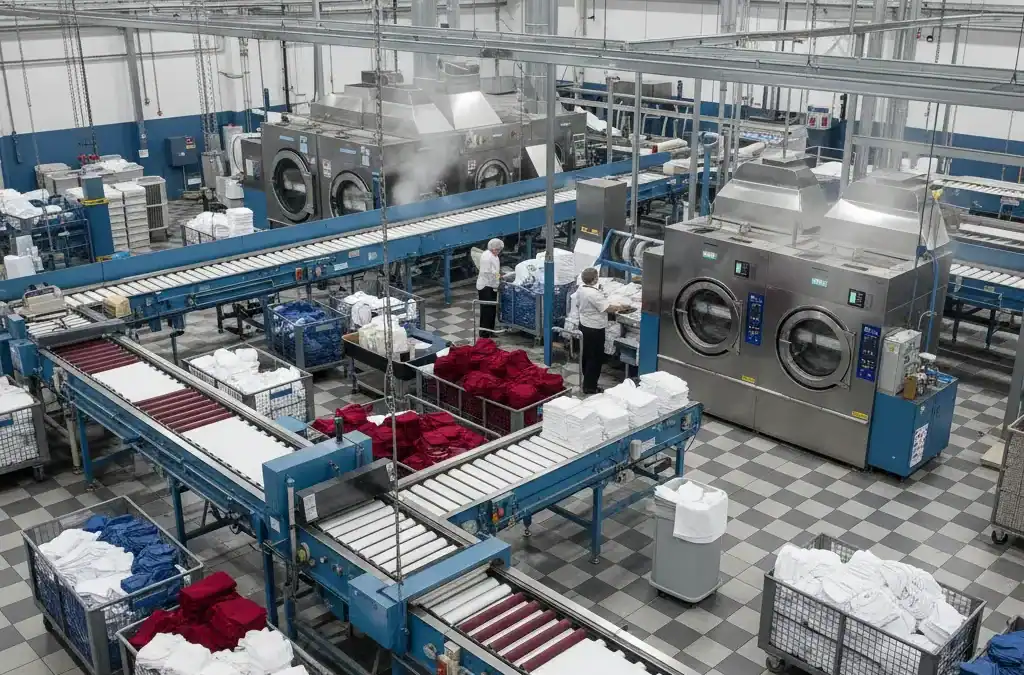
Restaurants that launder in-house have to prove that their process gets linens clean. That means documenting water temperatures, detergents, and drying, and keeping the washing machine area itself up to code. Restaurants that use a restaurant linen service hand that burden off.
A scheduled service picks up soiled linens on set days, which keeps bins from overflowing and gives staff a routine to follow. Clean linens come back laundered at commercial temperatures, pressed, and wrapped, so the clean storage shelf stays clean. Many providers can also supply the bins and bags that keep soiled linen contained between pickups. When an inspector asks how your linens are laundered, the answer is a professional facility rather than a back-room washer.
A Quick Self-Check Before Inspection Day
Walk the kitchen and dining room with these questions in mind:
- Are all wiping cloths either in sanitizer or in the soiled bin?
- Is every apron and chef coat on the floor clean enough that you would be comfortable having a guest see it?
- Are clean linens covered, off the floor, and away from chemicals?
- Is soiled linen contained and stored away from food?
- Do you know when your next linen pickup is, and is there enough clean stock to get there?
To Wrap It Up
Linens are a small part of a health inspection, but they are a visible one, and problems with them tend to suggest broader problems to an inspector. Separating clean from soiled, keeping wiping cloths in sanitizer, and relying on a professional linen service for laundering takes most of the risk off the table and lets you focus on the parts of the inspection that require your full attention.