No piece of restaurant linen works harder than a chef coat. It absorbs grease splatter from the flat top, sauce from the sauté station, sweat from a twelve-hour shift, and whatever hits it during a dish pit emergency. By the end of a busy night, a white coat can look like it has been through a war.
Many restaurants still ask kitchen staff to take their coats home and wash them. It seems simple and free. In practice it produces dingy uniforms, inconsistent results, and a steady stream of replacement costs. This post looks at why kitchen uniforms need commercial laundering and what a uniform program looks like week to week.
What Home Washing Does to a Chef Coat
A residential washing machine is built for lightly soiled clothing. Kitchen grease is a different problem. Oil-based stains need high water temperatures and detergents formulated to break them down, and most home machines run too cool and too gentle to manage it. The result tends to be:
- Set-in grease. Once a stain goes through a warm dryer without being fully removed, it is often permanent.
- Yellowing and graying. Whites lose their brightness after a few weeks of ordinary detergent and cold water.
- Lingering odor. Fryer oil and smoke can survive a home wash and come back the moment the coat warms up on the line.
- Shrinking and damage. Hot home dryers shrink cotton, pop buttons, and fray cuffs over time.
The Hidden Costs of Staff-Laundered Uniforms
The bigger issue with home laundering is that it depends on every cook, every week, having the time and the machine to do it. That breaks down fast. Someone shows up in yesterday’s coat because their laundry day slipped. A new hire has one coat and nowhere to wash it. A cook quits and takes three coats with them.
Each of those situations costs money, either in replacement uniforms or in the impression a stained coat makes when a guest looks through the pass. The expense rarely shows up as a line item, which is exactly why it goes unnoticed.
How Commercial Laundering Works
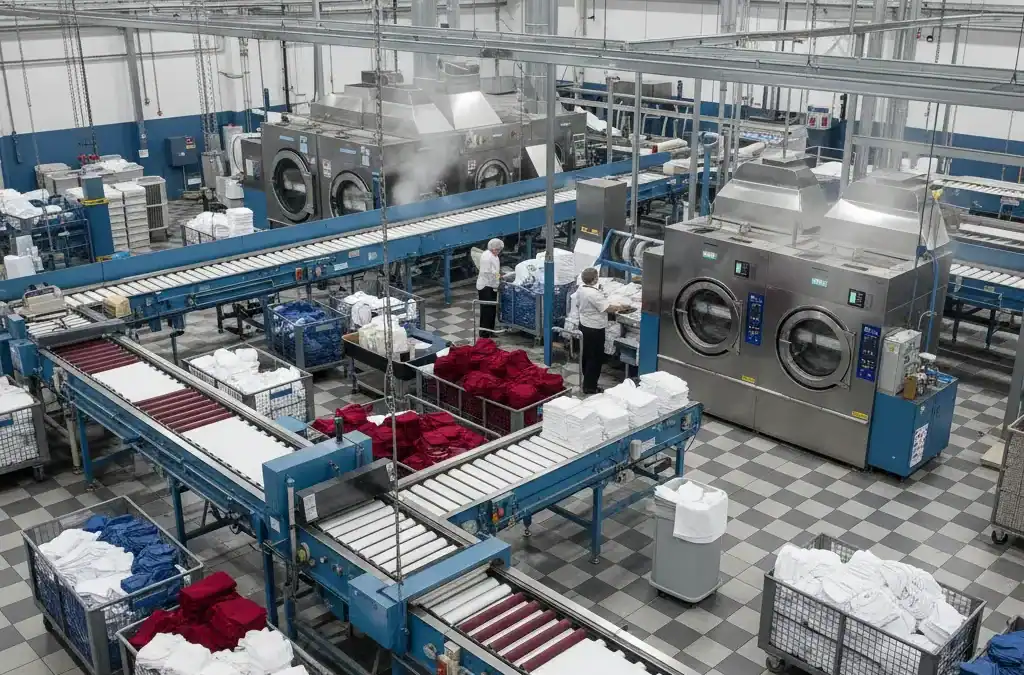
A commercial linen facility handles kitchen uniforms as a distinct category with its own process. In plain terms, that process usually includes:
- Sorting so heavily soiled coats and aprons are washed with the right formula rather than mixed in with table linens.
- Pre-treatment of grease and food stains before the main wash.
- High-temperature washing with detergents designed for kitchen soil, which removes oil and kills bacteria.
- Controlled drying and finishing that avoids the shrinkage and damage of a home dryer.
- Inspection and repair so coats with missing buttons or torn seams get fixed or pulled from rotation.
The Food Safety Angle
Clean outer clothing is part of the food code in most jurisdictions, and a chef coat that has not been properly sanitized can carry bacteria from raw proteins into finished plates. Commercial laundering brings uniforms to temperatures that a home machine typically cannot reach, which matters when the coat spends its day inches from food.
What a Uniform Program Looks Like Week to Week
With a restaurant linen service handling uniforms, the weekly routine is simple. Soiled coats and aprons go into a designated bin at the end of each shift. On pickup day, the driver collects the bin and drops off clean, pressed uniforms in the sizes your kitchen needs. Each cook has enough coats in rotation to start every shift in a clean one, and nobody takes laundry home.
Sizing and quantities are set up front and adjusted as your staff changes, so a new hire can be outfitted on the next delivery without a trip to a uniform store. Worn-out coats are replaced by the service rather than by your budget.
To Wrap It Up
Chef coats and kitchen uniforms are worth treating as seriously as any other piece of restaurant linen. Professional laundering keeps them white, keeps them sanitary, and keeps them in rotation far longer than home washing does. For most kitchens, moving uniforms onto a scheduled linen service removes a weekly headache and improves how the whole team looks on the line.